Over 300 men arrested after Military, Police embark on swoop operation in Ashanti region


The Ghana Armed Forces (GAF) and the Ghana Police Service have launched a coordinated military-police operation in the Ashanti Region and apprehended suspects linked to the recent attack on members of the National Anti-Illegal Mining Operations Secretariat (NAIMOS).
Three communities where the operation took place included, Anwona, Nhyieaso and Dadwen all near Obuasi.

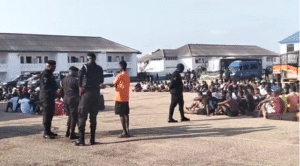
In the operation, over 300 males were apprehended and brought to the Patasi Police Depo for further action.
According to the Armed Forces, the operation is part of targeted intelligence-led exercises aimed at arresting individuals involved in the assault on the NAIMOS team, as well as some police officers and officials from the Environmental Protection Agency (EPA), including journalists who were attacked while carrying out their duties.
Speaking to the media, COP Dr. SAYIBU GARIBA, Director General In charge of Technical at the Ghana Police Service explained that the operation, which began on today, November 12, 2025, was aimed at prosecuting anyone attempting to obstruct the operations of security services or engaged in illegal mining activities would “face the full force of the law.”

Residents have been urged to remain calm and continue their normal activities, with assurances that the exercise is intended to enhance public safety and not cause panic.